A meeting you can never leave
Chat is a great input and a terrible interface for a project. You can only see your last message, never the whole thing. Nothing gets written down, so you re-explain everything every time you walk back in.
For investors
BuildOS is a thinking environment for people making complex things. It turns messy notes, voice, research, and stateless AI chats into one durable project — a place you and every agent you point at it can work from. We start with creators. The bet is that project context becomes the layer the whole agent era runs on.
“The model was never the bottleneck. The box was.”
“Investors? Could be you.” — the 15-second version
The problem
AI got radically more capable. The container we run it through did not change. Real projects still live in a chat box — and a chat box gives you exactly one primitive: a meeting you can never leave.
Chat is a great input and a terrible interface for a project. You can only see your last message, never the whole thing. Nothing gets written down, so you re-explain everything every time you walk back in.
Close the tab and the thinking evaporates. Context has nowhere durable to live, so work resets instead of compounding. Heavy users spend half the day paying the context-paste tax.
At 95% reliability per step, a 20-step task succeeds only ~36% of the time. Every error stays in the room and compounds — the thread does not just fail to help, it amplifies the failure.
Projects do not fail because the agent is dumb. They fail because we hired someone brilliant and gave them no onboarding, no memory, and no way to hand off work.
Why now
A coding agent, a writing agent, a research agent, vertical agents for everything — they all start from zero and contradict each other. Someone has to be the surface they all read from.
In 2022 you had one AI tool. Today, three. In two years heavy users will have twenty. As agents-per-person climbs, the cost of fragmented, contradictory context climbs with it. There is no future where every agent stays siloed.
Inference gets cheaper every quarter and models converge. The unbottleneck for AI usefulness is no longer the model — it is the context. And it has to be a neutral, user-owned surface, because no single provider can be trusted to hold it.
The Notion category splits the way email split from postal mail. Team OS stays; a new category — a personal context OS for one person and their agents — emerges. Slack did not kill email. It took a slice and built a $30B company.
This is already visible: Gartner projects 40% of agentic-AI projects will be canceled by 2027, and MIT finds 95% of enterprise GenAI pilots deliver zero P&L impact — and not for lack of model horsepower.
The bet
It cannot live in each model — they compete and lose state on every chat. It cannot live in each tool — they fragment. It has to be a neutral, user-owned surface. Either we build it or someone else does. BuildOS is the system of record for one person's work in the agent era.
Start with a brain dump. It rolls. Every dump, task, and update packs on until the context moves under its own weight. That is the snowball.
Why it compounds
ChatGPT is the same on day 1 and day 100. BuildOS on day 100 knows your project — the characters, the brand voice, the blockers, the decisions, the history.
The model is not getting smarter. Your project state is. Every agent you point at it inherits that intelligence for free.
How it works
BuildOS starts with a narrow pain: people doing serious creative or builder work are tired of rebuilding context every time they return.
Start with messy notes, a voice dump, research, a script, or a project update — not a rigid template.
BuildOS turns that raw material into connected projects, tasks, documents, goals, milestones, risks, and plans.
The agent, daily briefs, calendar tools, and the external-agent gateway all work against the same project graph — read and write.
Every capture, update, brief, and agent action makes the context richer. Public project pages turn finished work into a discovery surface.
Framework for the person. Harness for the agent. Both read the same project state; neither is abstracted away.
Defensibility
The moat is the shared context layer — and the user controls it. BuildOS does not compete on model quality; it competes on context quality, which the user owns.
Not a better chat
We are not building a better chat. We are building the layer underneath that makes all the chats useful.
Not Notion
Notion is the system of record for teams, with AI bolted on as a sidebar. BuildOS is built from day one for one human and N agents sharing one context surface.
Not read-only memory
Agents do not just read the context — they update it. "Tell your agent to go update BuildOS" is a real sentence.
Not delegation software
The product is checkpoint behavior, not delegation. Users return daily, update, then go act. Once it holds your project, you do not leave.
We start with creators making multi-modal, idiosyncratic projects — the novelist also building a Substack, the YouTuber writing a book. They have five vertical tools and no place where the whole project lives. That is BuildOS-shaped. And because their job is producing content, every happy user is a marketing channel.
Current state
The product has the core surfaces the thesis requires. The immediate work is activation, proof, and narrow creator-led distribution.
Product access is live; paid billing is not yet active. Projects, documents, daily briefs, calendar sync, and agentic chat are in production.
External agents connect through a hardened MCP gateway and work the same project graph as the human.
Authors and YouTubers first; podcasters, course creators, and founder-creators next.
Built by DJ Wayne — using BuildOS to build BuildOS.
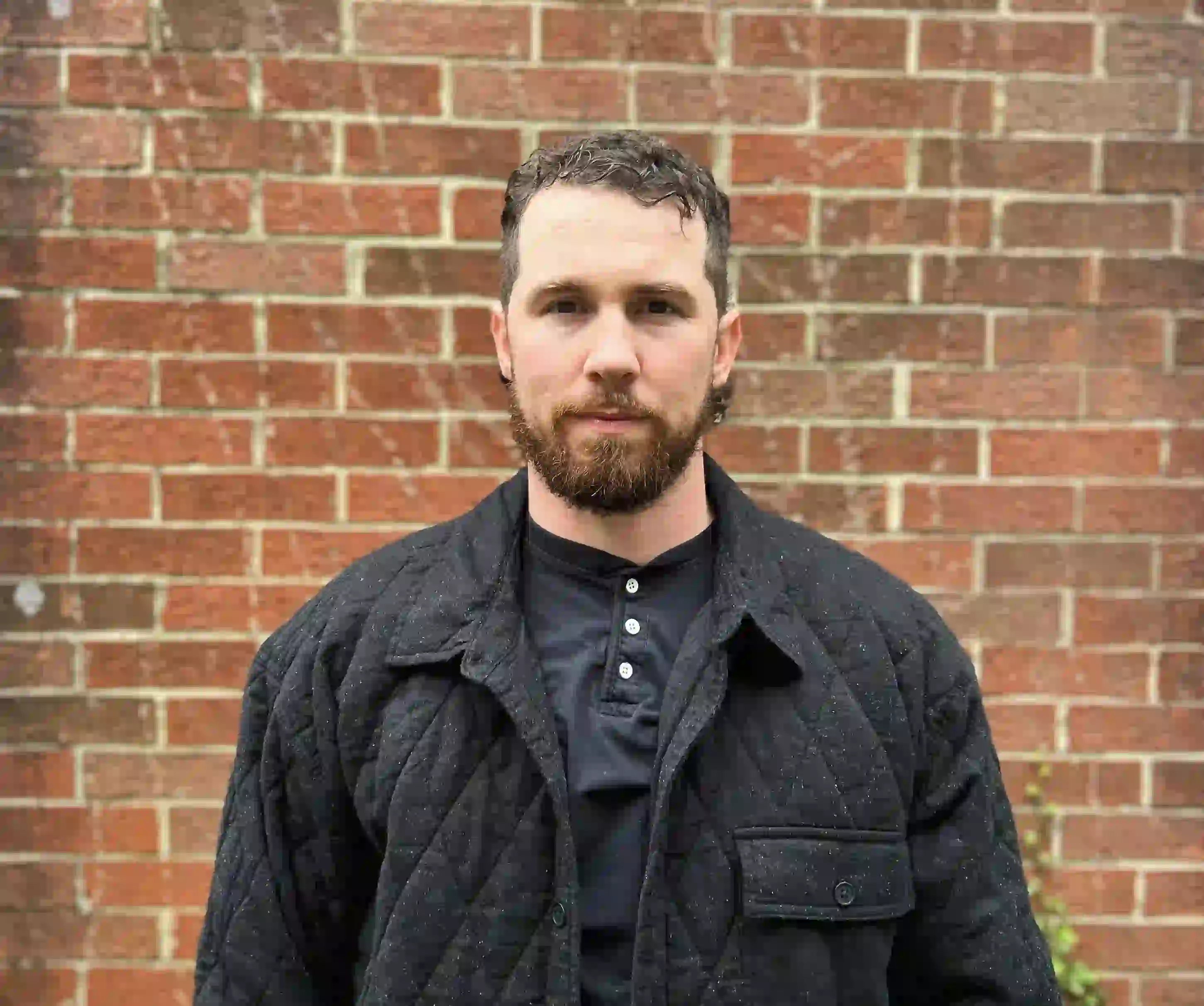
Founder
Pastor's kid → USMC Scout Sniper → software engineer → founder. DJ built BuildOS out of his own operating problem: juggling engineering work, writing, and multiple projects while re-pasting the same context into every AI chat — saving documents just to paste them back in.
He was solving AI memory before the platforms admitted the problem existed. At Curri, a YC-backed logistics startup, he reverse-engineered delivery APIs into a matching engine — agentic tool use before it had a name. BuildOS is what he uses to build BuildOS.
The through-line is a comeback pattern: cut from his sniper team right before deployment, he earned his way back and re-passed the brutal indoc from scratch. He is not afraid of failure — he is the one who ships.
What I'm looking for
BuildOS is raising a seed round. The best-fit investors tend to share three things.
You already believe the agent era needs a neutral, user-owned context surface — and you back that thesis before the metrics catch up.
Creators and operators who feel this problem in their own week. You bring distribution and product truth, not just capital.
You bet on the person: a blue-collar builder who comes back from failure and ships.
Reach out for the current investor memo, a product walkthrough, or a direct conversation about the BuildOS roadmap.